Vegan Thai Red Curry with Vegetables
Cristian
Recipe Developer | 200+ Tested Recipes | Founder of Meatless.io
Published: January 8, 2026 | Updated: January 8, 2026
✓ Family-Tested Recipe: This Thai curry rivals our favorite restaurant version. The homemade paste makes all the difference, but store-bought works great too for busy weeknights.
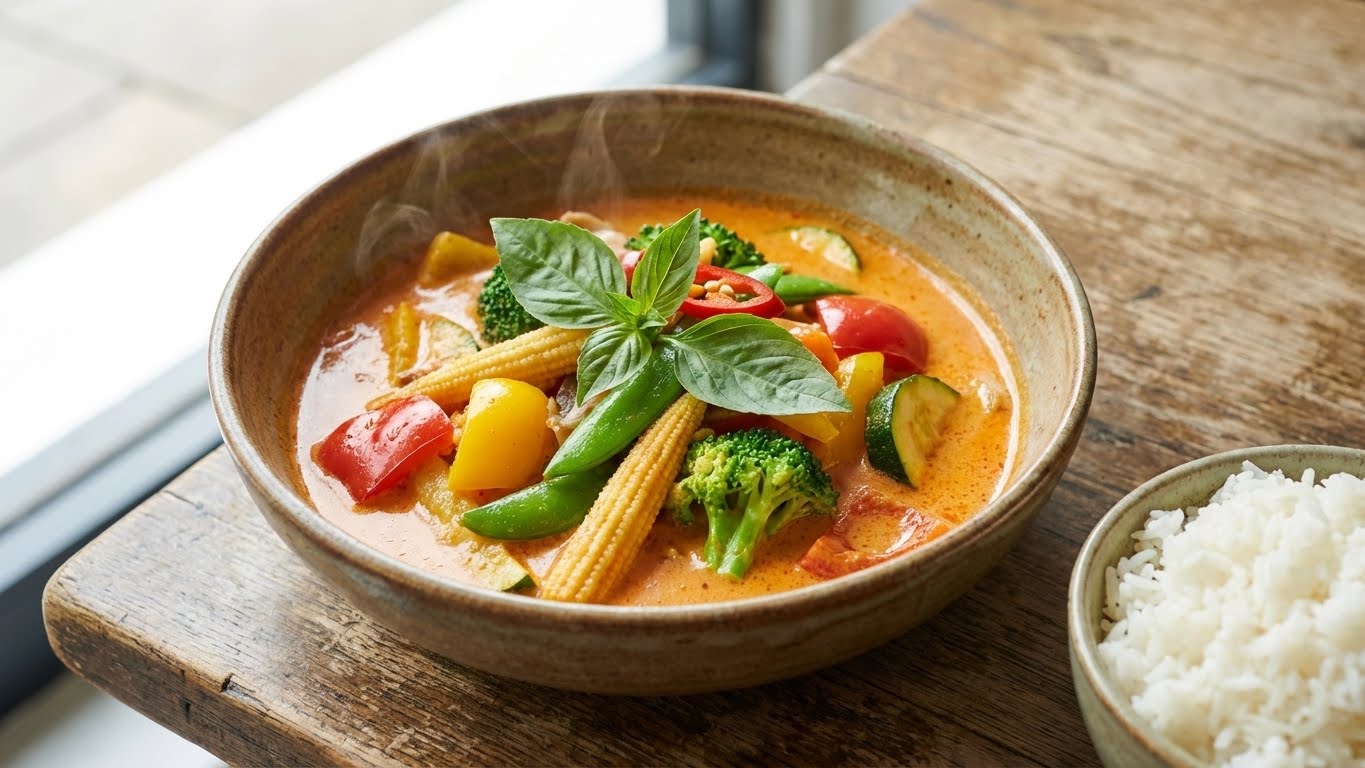
Restaurant-quality vegan Thai red curry loaded with colorful vegetables in a creamy coconut sauce. Aromatic, spicy, and ready in just 25 minutes.
Prep Time
10 mins
Cook Time
15 mins
Total Time
25 mins
Servings
4 servings
Ingredients
- •2 tablespoons coconut oil or vegetable oil
- •3-4 tablespoons Thai red curry paste
- •1 can (14oz) full-fat coconut milk
- •1 cup vegetable broth
- •1 red bell pepper, sliced
- •1 yellow bell pepper, sliced
- •1 cup broccoli florets
- •1 cup snap peas or snow peas
- •1 medium zucchini, sliced into half-moons
- •1 cup baby corn, halved
- •8oz firm tofu, cubed (optional)
- •2 tablespoons soy sauce or tamari
- •1 tablespoon brown sugar or coconut sugar
- •1 tablespoon lime juice
- •Fresh Thai basil or cilantro for garnish
- •Lime wedges for serving
- •Cooked jasmine rice for serving
Instructions
- 1
Bloom the curry paste
Heat coconut oil in a large pot or wok over medium heat. Add curry paste and cook for 2-3 minutes, stirring constantly, until fragrant and darkened slightly. This blooming process releases the aromatic compounds and deepens the flavor.
- 2
Add coconut milk
Pour in coconut milk, stirring to combine with the curry paste. Bring to a gentle simmer and cook for 3-4 minutes, allowing the sauce to thicken slightly and the flavors to meld.
- 3
Add vegetables
Add vegetable broth, soy sauce, and brown sugar. Stir well. Add harder vegetables first (broccoli, bell peppers, baby corn) and simmer for 5 minutes. Then add softer vegetables (zucchini, snap peas) and tofu if using. Cook for another 5-7 minutes until all vegetables are tender but still crisp.
- 4
Adjust seasoning
Taste the curry and adjust seasoning. Add more curry paste for heat, soy sauce for saltiness, or sugar for sweetness. Stir in lime juice to brighten the flavors.
- 5
Serve
Remove from heat. Ladle curry over steamed jasmine rice in bowls. Garnish with fresh Thai basil or cilantro. Serve with lime wedges on the side for squeezing over the curry.
Nutrition Information
Calories
385 calories
Protein
12g
Fat
24g
Carbs
34g
Fiber
6g
Frequently Asked Questions
What vegetables work best in Thai red curry?
The beauty of Thai curry is its versatility! Bell peppers, broccoli, snap peas, zucchini, baby corn, mushrooms, and eggplant all work wonderfully. Choose vegetables with different textures and colors for visual appeal. Add harder vegetables first (broccoli, carrots, baby corn) so they have more cooking time, then add tender vegetables (snap peas, zucchini, spinach) near the end to prevent overcooking.
Can I use lite coconut milk instead of full-fat?
While you can use lite coconut milk, full-fat coconut milk creates a much creamier, richer curry with better flavor and mouthfeel. The fat in coconut milk carries the curry spices and creates that authentic restaurant texture. If you must use lite, consider adding a tablespoon of coconut cream or peanut butter to restore some richness.
How spicy is Thai red curry paste?
Thai red curry paste has moderate heat - spicier than yellow curry but milder than green curry. Heat levels vary by brand. Start with 2-3 tablespoons and add more to taste. The coconut milk mellows the spice significantly. For less heat, use less paste and add more coconut milk. For more heat, add extra paste or fresh sliced Thai chilies.
Can I make this curry ahead of time?
Yes! Thai curry actually tastes better the next day as flavors meld. Store in an airtight container in the refrigerator for up to 4 days. The vegetables may soften slightly, so slightly undercook them if meal prepping. Reheat gently on the stovetop, adding a splash of coconut milk or vegetable broth if it's too thick. Freeze for up to 3 months.
What's the difference between red, green, and yellow curry?
The color comes from different chilies and ingredients. Red curry uses dried red chilies and is moderately spicy with a slightly sweet, earthy flavor. Green curry uses fresh green chilies and Thai basil, making it the spiciest with a more herbal taste. Yellow curry contains turmeric and is the mildest, with warm, earthy flavors similar to Indian curry. All use coconut milk as a base.
Is store-bought curry paste as good as homemade?
Good quality store-bought Thai curry paste is excellent and saves significant time. Look for brands like Mae Ploy, Thai Kitchen, or Maesri for authentic flavor. Check labels to ensure vegan if needed - some contain shrimp paste. Homemade paste offers more control over heat and flavor, but quality store-bought paste is perfectly acceptable and what most Thai restaurants use.