Fresh Caprese Pasta
Cristian
Recipe Developer | 200+ Tested Recipes | Founder of Meatless.io
Published: January 8, 2026 | Updated: January 8, 2026
✓ Family-Tested Recipe: This is our go-to summer pasta! The no-cook tomato sauce keeps the kitchen cool and tastes incredibly fresh. We make it weekly when tomatoes are in season.
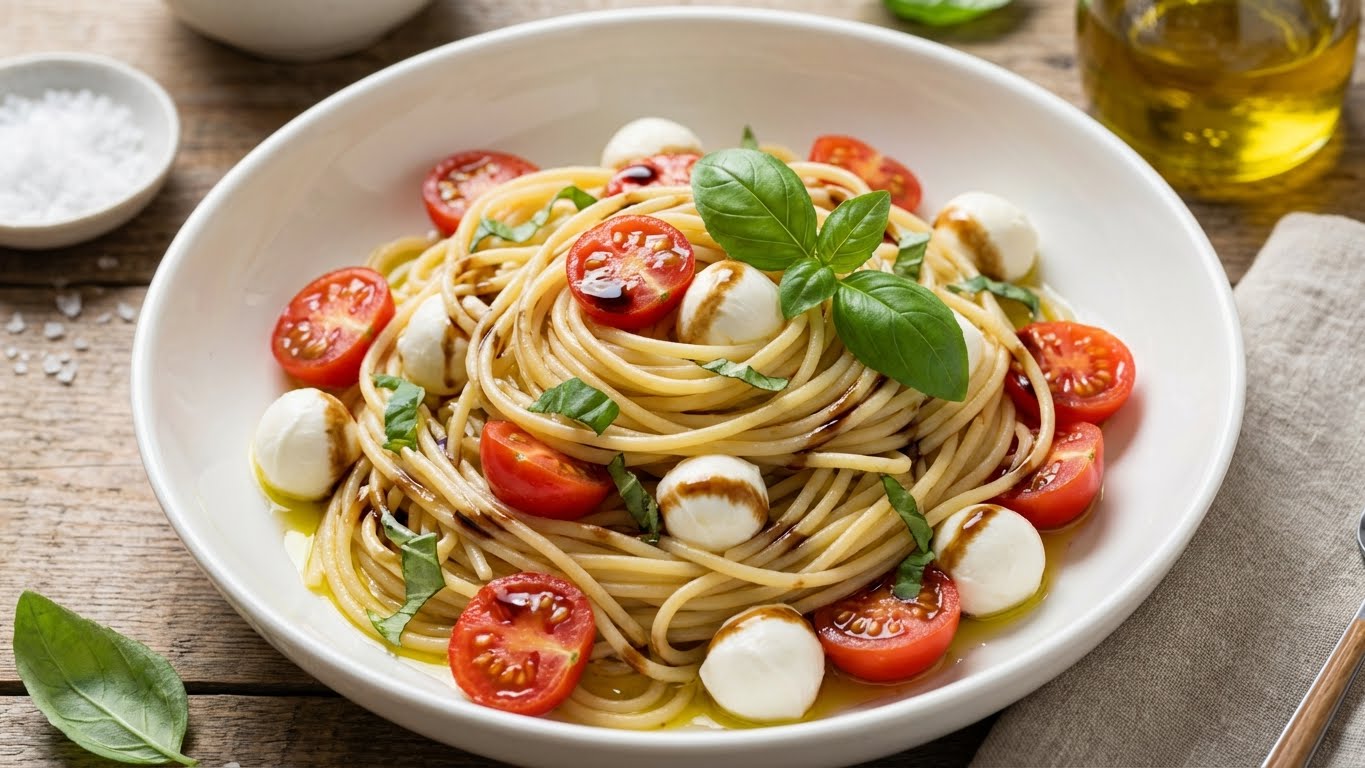
Light and fresh caprese pasta with cherry tomatoes, mozzarella, and basil. No-cook sauce ready in 15 minutes. Perfect summer dinner or side dish.
Prep Time
10 mins
Cook Time
5 mins
Total Time
15 mins
Servings
4 servings
Ingredients
- •1 pound pasta (spaghetti, linguine, or penne)
- •2 pints cherry or grape tomatoes, halved
- •8oz fresh mozzarella, cut into bite-sized pieces
- •1/2 cup fresh basil leaves, torn or chopped
- •3 cloves garlic, minced
- •1/3 cup extra virgin olive oil
- •2 tablespoons balsamic vinegar
- •1 teaspoon salt
- •1/2 teaspoon black pepper
- •1/4 teaspoon red pepper flakes (optional)
- •1/4 cup grated Parmesan cheese
- •Optional: pine nuts, arugula, or olives
Instructions
- 1
Make no-cook tomato sauce
While pasta water heats, combine halved cherry tomatoes, minced garlic, olive oil, balsamic vinegar, salt, pepper, and red pepper flakes if using in a large serving bowl. Toss well and let sit at room temperature for at least 10 minutes. The tomatoes will release their juices and create a light, fresh sauce. The longer it sits (up to 30 minutes), the better the flavors meld.
- 2
Cook pasta
Bring a large pot of salted water to boil. Cook pasta according to package directions until al dente. Before draining, reserve 1 cup of pasta cooking water - the starchy water helps bind the sauce. Drain pasta but do not rinse.
- 3
Combine hot pasta with sauce
Immediately add hot drained pasta to the bowl with tomato mixture. The heat from the pasta will slightly soften the tomatoes and warm the sauce. Toss well to coat pasta with the tomato juices and olive oil. If the sauce seems dry, add pasta water 2 tablespoons at a time until desired consistency.
- 4
Add cheese and basil
Add fresh mozzarella pieces and torn basil leaves. Gently toss to distribute throughout the pasta. The residual heat will slightly melt the mozzarella, creating pockets of creamy cheese. Don't overmix - you want distinct pieces of melty mozzarella, not fully melted.
- 5
Finish and serve
Sprinkle with grated Parmesan cheese. Taste and adjust salt and pepper. Serve immediately while warm, or serve at room temperature as a pasta salad. Garnish with extra fresh basil. Optional additions: toasted pine nuts for crunch, fresh arugula for peppery bite, or Kalamata olives for briny flavor.
Nutrition Information
Calories
545 calories
Protein
22g
Fat
24g
Carbs
62g
Fiber
4g
Frequently Asked Questions
Can I use regular mozzarella instead of fresh?
Fresh mozzarella (packed in water) is essential for authentic caprese pasta. It's soft, milky, and slightly melts when tossed with hot pasta. Low-moisture mozzarella (shredded or block) won't give the same creamy texture. Fresh mozzarella comes in balls or logs - buy it in the deli or specialty cheese section. Burrata (even creamier) is an amazing upgrade. Mini mozzarella balls (bocconcini or ciliegine) are perfect portion sizes for this dish.
What if tomatoes aren't in season?
Caprese pasta shines with peak summer tomatoes, but you can make it year-round. In winter, use the sweetest cherry or grape tomatoes you can find - they're more reliable than larger tomatoes. To boost flavor, roast halved tomatoes at 400°F for 15 minutes with olive oil and garlic before tossing with pasta. You can also use high-quality jarred sun-dried tomatoes (oil-packed) mixed with fresh tomatoes. Avoid watery, flavorless tomatoes - they'll make a bland dish.
Can I make caprese pasta ahead?
Caprese pasta is best served fresh or within 2 hours at room temperature as a pasta salad. The no-cook sauce can sit at room temp for 30 minutes before tossing with pasta - this actually improves flavor. Refrigerated leftovers keep 2 days but the pasta absorbs sauce and mozzarella hardens. To revive, let come to room temperature and add fresh tomatoes, basil, and a drizzle of olive oil. Some people prefer it as a cold pasta salad the next day!
What pasta shape works best?
Long pasta like spaghetti or linguine is traditional and elegant. Short pasta like penne, rigatoni, or farfalle works great too - the tomatoes nestle into crevices. Avoid tiny pasta like orzo which gets lost. For a twist, try orecchiette ('little ears') which cups the tomatoes perfectly. Fresh pasta is luxurious but dried pasta works excellently. The key is cooking it al dente so it has texture against the soft tomatoes and mozzarella.
Can I add protein to make it more filling?
Absolutely! Grilled chicken breast slices are classic and don't overpower delicate flavors. Grilled or sautéed shrimp also pairs beautifully. For vegetarian protein, add white beans or chickpeas. Crispy pan-fried tofu works for vegan versions (use vegan mozzarella alternative). Hard-boiled eggs sliced on top add protein for a cold pasta salad. Keep proteins simple - don't use heavy sauces or strong spices that compete with fresh tomato-basil flavors.
Why is my caprese pasta bland?
Season generously! The no-cook sauce needs more salt than you think - taste and adjust. Use high-quality ingredients: peak-season tomatoes, fresh (not dried) basil, good extra virgin olive oil, and fresh mozzarella. Balsamic vinegar adds depth - don't skip it. Letting the tomato mixture sit for 10-30 minutes before tossing develops flavor. Pasta water adds salt and helps sauce cling. Fresh cracked black pepper and red pepper flakes add complexity. Quality ingredients make all the difference in simple recipes like this.