Best Potatoes for Mashed Potatoes: The Ultimate Guide
Cristian
Recipe Developer | 200+ Tested Recipes | Founder of Meatless.io
Published: January 4, 2026 | Updated: January 19, 2026
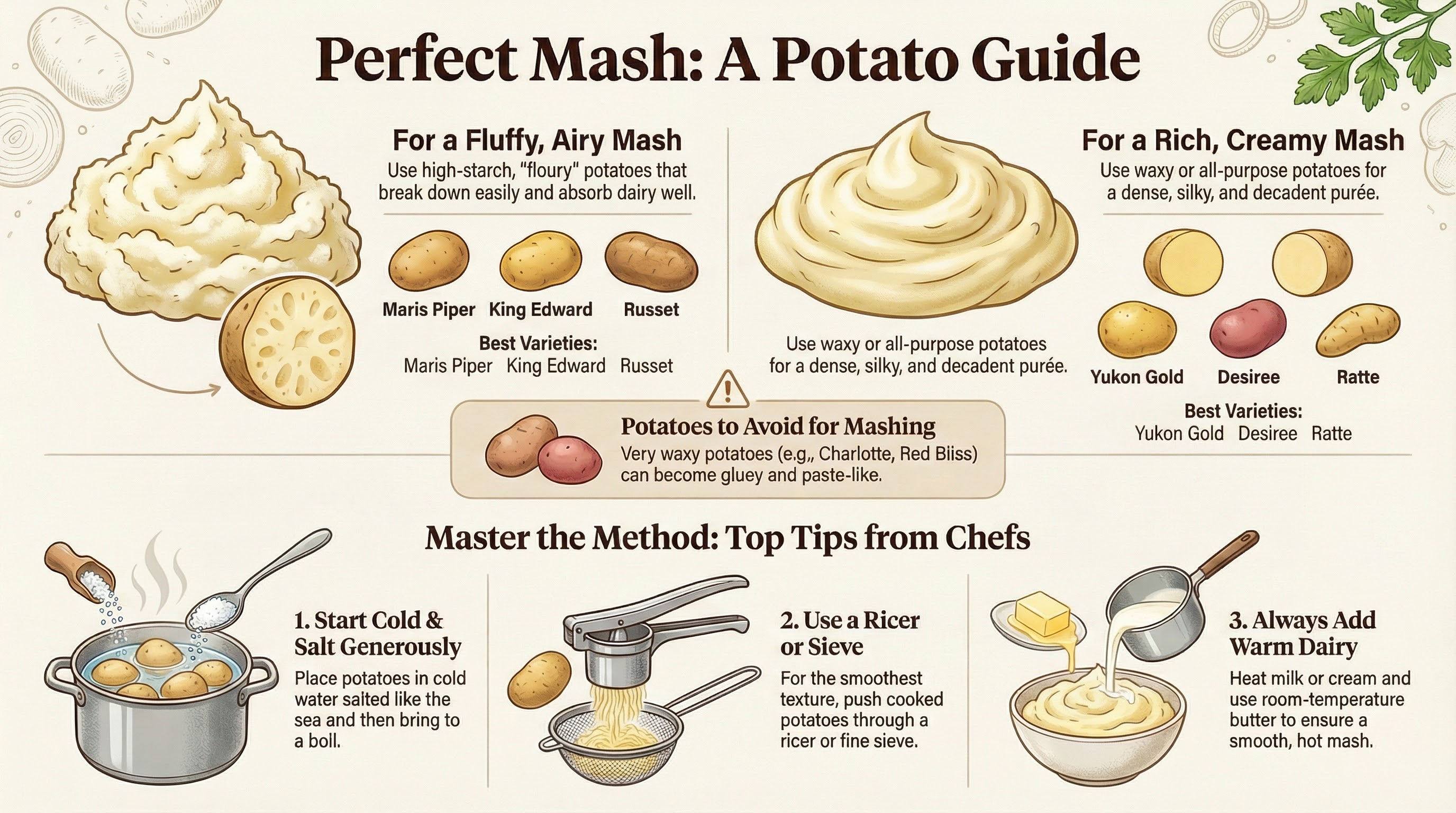
Do you want to know the secret to making mashed potatoes that taste like they came from a fancy 3-Michelin Star restaurant? It is not magic—it is science! Whether you like them fluffy like a cloud or creamy like butter, the trick is picking the right potato and using the right tools.
We have gathered tips from famous experts, including Chef Jean-Pierre, the "Potato Queen" Poppy O'Toole, and food scientists from Serious Eats and Bon Appétit. This guide is easy enough for beginners but full of expert secrets to make you a kitchen hero.
Here is how to make the best mashed potatoes of your life.
Step 1: Pick Your Potato Fighter
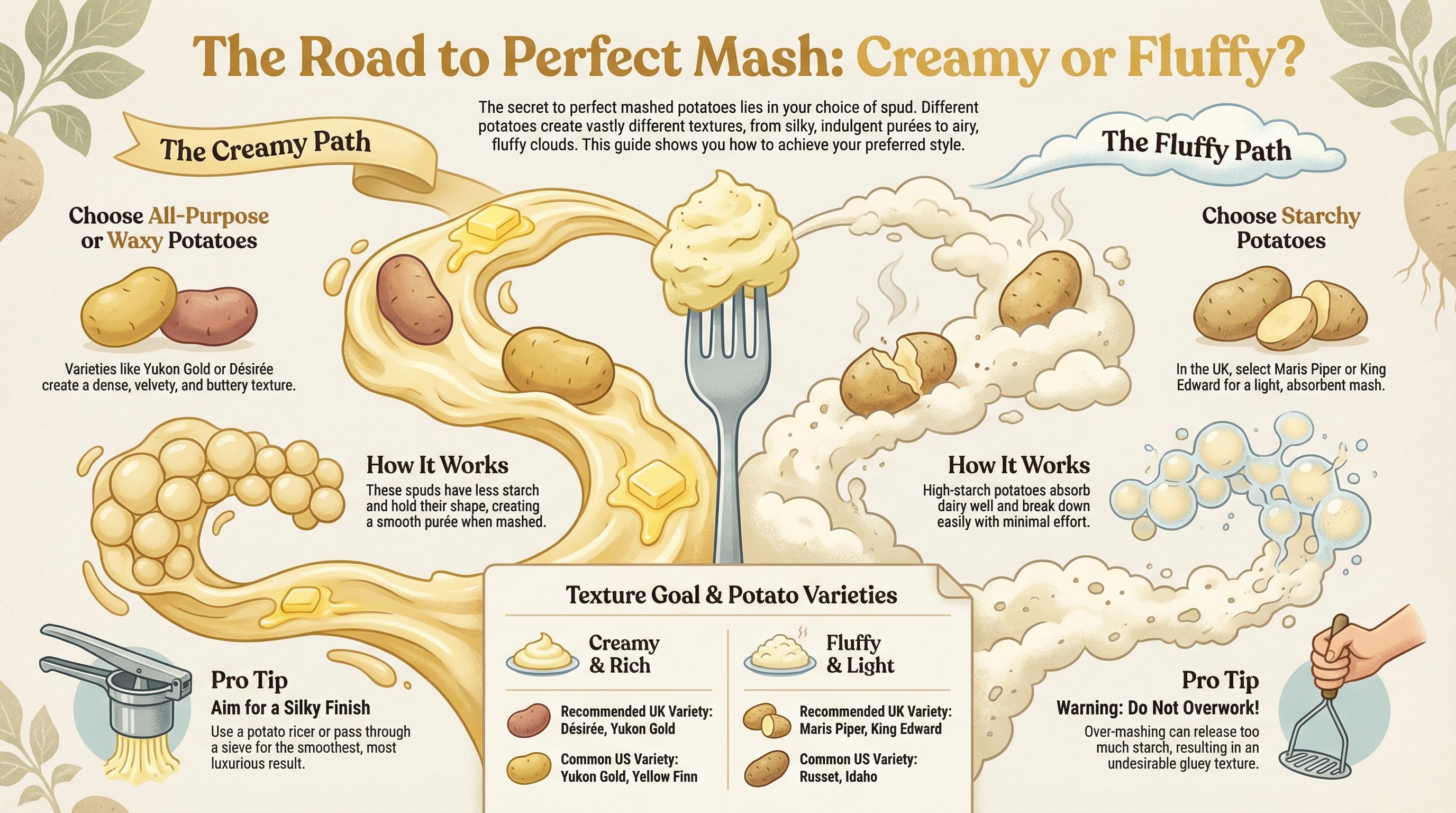
The most important choice happens at the grocery store. Potatoes are not all the same! They are either "starchy" (fluffy) or "waxy" (smooth).
The Fluffy Choice: Russet (or Idaho)
If you want mash that is "light as air" or like a "cumulus cloud," you want Russet potatoes (often called Idaho potatoes).
- •Why? They are high in starch and low in water. They drink up butter like a sponge.
- •The Result: A texture that is fluffy and light.
- •Best For: People who hate gummy or sticky potatoes.
The Creamy Choice: Yukon Gold
If you want rich, buttery, yellow potatoes, choose Yukon Golds.
- •Why? These are naturally creamy and taste buttery even before you add ingredients. They hold their shape better than Russets.
- •The Result: A texture that Chef Jean-Pierre describes as "smooth as silk".
- •Chef's Tip: Many chefs mix Russets and Yukons together to get the best of both worlds.
The "Pro" Choice: La Ratte
Real French chefs (like Joël Robuchon) love a tiny potato called La Ratte. They taste nutty, like chestnuts.
- •Warning: They are expensive and very hard to peel because they are bumpy and small.
The UK Champions: Maris Piper & King Edward
If you live in the UK, the "Potato Queen" Poppy O'Toole says Maris Piper or King Edward are the kings of mash. They are the perfect middle ground between fluffy and starchy.
🚫 The "Do Not Use" List
Never use waxy potatoes for mash. If you fight them, they turn into sticky "wallpaper paste".
- •Avoid: Red Potatoes (Red Bliss), New Potatoes, and Fingerlings (unless you want soup or salad potatoes).
Step 2: The Science of Cooking
Start with Cold Water
This is a big chef secret! Do not drop potatoes into hot boiling water. Put your cut potatoes in a pot of cold water first, then turn on the heat.
- •Why? If the water is hot, the outside cooks too fast and falls apart before the inside is done.
Salt Like the Ocean
Potatoes are bland on their own. Chef Poppy O'Toole says the water should have "ocean vibes"—it should taste like salty sea water. Chef Jean-Pierre suggests one tablespoon of salt for every gallon of water.
Skin On or Off?
- •Off: For a perfect white-tablecloth look, peel them first.
- •On: Chef Jean-Pierre boils his Yukon Golds with the skins on! He says this stops water from soaking into the potato. He peels them after cooking.
Step 3: Steam Drying (The Anti-Soggy Step)
Water is the enemy of fluffy mash. If your potatoes are wet, your mash will be runny.
- Drain the water out of the pot.
- Steam Dry: Put the potatoes back in the hot pot (or in the oven at 300°F) for a few minutes.
- Let the steam escape until the potatoes look dry and "floury".
Step 4: The Right Tools (No Blenders!)
This is where many people make a mistake. You must be gentle!
- •The Hero: Potato Ricer - A potato ricer is the #1 tool recommended by experts. It squeezes the potato through tiny holes, making it fluffy without overworking it.
- •The Sidekick: Food Mill - This tool has a crank handle. It is great for big batches and makes a very smooth texture.
- •The Villain: The Blender - NEVER use a blender or food processor! The fast blades rip the starch cells apart and turn your potatoes into gluey goop. Once this happens, you cannot fix it (unless you add lots of cheese to make Aligot).
Want Michelin Star Quality? For the smoothest potatoes ever, push your riced potatoes through a fine mesh sieve (or tamis). It takes extra work, but it makes them "velvety smooth".
Step 5: The Perfect Mix (Emulsion)
Now it is time to add the fat! This creates an emulsion (a fancy word for mixing fat and liquid smoothly).
- Warm Milk/Cream: Do not pour cold milk into hot potatoes! Heat up your milk or heavy cream first. This keeps the potatoes hot.
- Room Temperature Butter: Use soft butter, not hard cold butter. It melts faster and mixes better without lumps.
- The Ratio: For super fancy French potatoes, some chefs use 1 pound of butter for every 2 pounds of potatoes!
Summary Checklist
- •✅ Buy: Russets (fluffy) or Yukon Golds (creamy).
- •✅ Cook: Start in cold water with lots of salt.
- •✅ Dry: Let the steam escape after draining.
- •✅ Mash: Use a ricer (no blenders!).
- •✅ Mix: Add warm milk and soft butter.
Now you are ready to make the best side dish ever. As Chef Jean-Pierre says, "You'll never view mashed potatoes the same way again"!
Perfect Mashed Potatoes
Chef-level mashed potatoes using Russet or Yukon Gold potatoes. Learn the science behind fluffy, creamy mashed potatoes with expert tips from Chef Jean-Pierre and Poppy O'Toole.
Prep Time
15 mins
Cook Time
20 mins
Total Time
35 mins
Servings
6 servings
Ingredients
- •2 pounds Russet potatoes or Yukon Gold potatoes
- •1 tablespoon salt (for cooking water)
- •4 tablespoons unsalted butter (room temperature)
- •1/2 cup whole milk or heavy cream (warmed)
- •Salt and pepper to taste
Instructions
- 1
Choose your potatoes
Select Russet potatoes for fluffy texture or Yukon Gold for creamy texture. Peel if desired.
- 2
Start with cold water
Place cut potatoes in a large pot and cover with cold water. Add 1 tablespoon salt per gallon of water (water should taste like ocean).
- 3
Cook the potatoes
Bring to a boil, then reduce heat and simmer for 15-20 minutes until potatoes are fork-tender.
- 4
Steam dry
Drain potatoes and return to hot pot. Let steam escape for 2-3 minutes until potatoes look dry and floury.
- 5
Rice the potatoes
Use a potato ricer to press potatoes through. Never use a blender or food processor as this creates gluey texture.
- 6
Add butter and cream
Warm the milk or cream first. Add room temperature butter and warm milk to riced potatoes. Gently fold until smooth and creamy.
- 7
Season and serve
Season with salt and pepper to taste. Serve immediately while hot.
Frequently Asked Questions
What is the best potato for mashed potatoes?
Russet potatoes (Idaho potatoes) are best for fluffy, light mashed potatoes due to their high starch content. Yukon Gold potatoes are best for creamy, buttery mashed potatoes with a naturally rich flavor. Many chefs mix both varieties to get the best of both worlds.
Why use a potato ricer instead of a masher?
A potato ricer creates fluffier, smoother mashed potatoes by pressing potatoes through small holes without overworking them. Traditional mashers can leave lumps and require more work, while blenders and food processors break down the starch cells and create gluey, sticky potatoes.
Should I start potatoes in cold or boiling water?
Always start potatoes in cold water, then bring to a boil. Starting with cold water ensures even cooking from the inside out. If you drop potatoes into boiling water, the outside cooks too fast and can fall apart before the inside is done.
Why are my mashed potatoes gluey and sticky?
Gluey mashed potatoes are caused by over-mixing or using the wrong tool (like a blender or food processor). The fast blades rupture the starch cells, creating a sticky, paste-like texture. Always use a potato ricer or hand masher and work gently. Using waxy potatoes instead of starchy varieties can also cause gumminess.
Should mashed potatoes be made with milk or cream?
Either works! Whole milk creates lighter mashed potatoes, while heavy cream makes them richer and more luxurious. The key is to warm the milk or cream before adding it to the potatoes to keep them hot and help create a smooth emulsion. Never add cold milk to hot potatoes.
How do you keep mashed potatoes from getting watery?
Steam-dry your potatoes after draining. Return the drained potatoes to the hot pot or place in a 300°F oven for 2-3 minutes to let excess moisture evaporate. The potatoes should look dry and floury before mashing. This prevents watery, runny mashed potatoes.
Topics covered in this guide: