The Ultimate Homemade Katsu Curry Sauce (Wagamama Copycat)
Cristian
Recipe Developer | 200+ Tested Recipes | Founder of Meatless.io
Published: January 11, 2026 | Updated: January 11, 2026
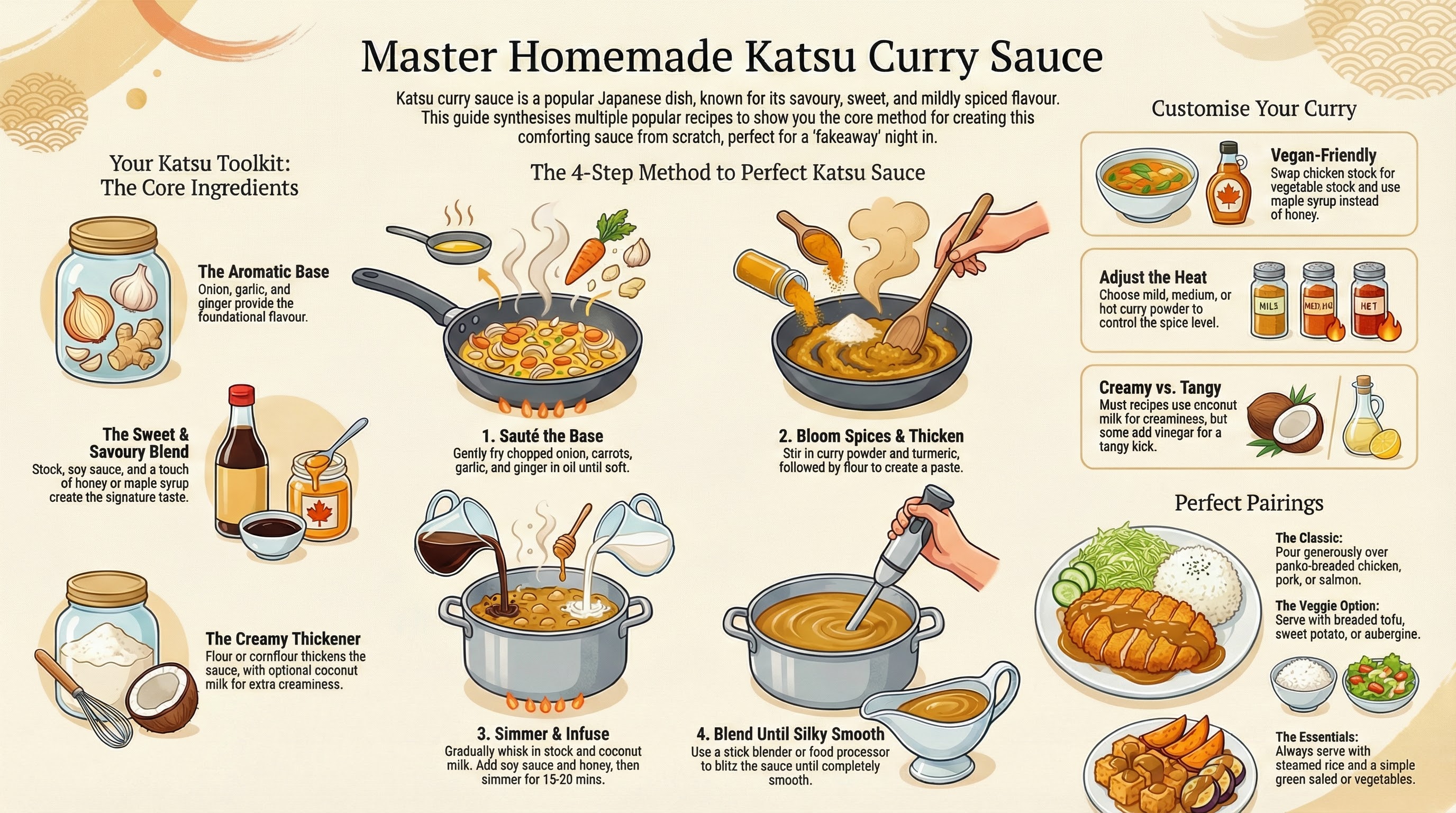
If you have ever sat in a Wagamama restaurant, you know that the Katsu Curry is a legend. It is the ultimate comfort food: crispy breaded chicken (or vegetables) smothered in a silky, aromatic, golden sauce.
Many home recipes miss the mark because they rely on generic curry powder and water. But the official Wagamama recipe reveals that the restaurant actually uses a pre-made paste. To recreate that depth of flavour from scratch at home, you need more than just garlic and onions. You need specific aromatics, the right texture technique, and a secret ingredient for balance.
This guide moves beyond the family favourite versions to give you the practitioner method for a sauce that actually tastes like the real thing.
What is Katsu Sauce?
First, a quick clarification. Katsu actually refers to the breaded cutlet (usually chicken or pork), not the sauce itself. In Japan, the sauce served with these cutlets is often a fruit-based brown condiment called Tonkatsu sauce (similar to BBQ sauce).
However, the Katsu Curry we know and love in the UK - popularised by Wagamama - is a fusion dish. It blends the Japanese love for panko-fried protein with British-introduced curry spices. It is distinctively sweet, mild, and velvety smooth.
The Secret Ingredients for Authenticity
To move this from a nice curry to an authentic copycat, we must include the Core Entities often missing from basic recipes:
- •Fresh Ginger and Garlic: You cannot skip these. While some recipes only call for garlic, the official Wagamama version and top-tier copycats use fresh ginger to provide that essential aromatic base.
- •Turmeric: This is non-negotiable for achieving that signature neon-yellow colour found in restaurant sauces.
- •Coconut Milk: There is a debate here. Some home cooks prefer to skip it to avoid a creamy taste. However, the official Wagamama recipe does use coconut milk to smooth out the spices.
- •S&B Curry Powder: For the most authentic Japanese flavour profile, look for S&B brand curry powder. It is sweeter and less harsh than Indian Madras powders.
- •The Acid Kick: Celebrity Chef Rick Stein suggests a splash of malt vinegar to give the sauce vigour and match the Western palate. This acidity cuts through the floury texture and sweetness.
Flour vs. Cornflour: Choosing Your Texture
One of the biggest struggles home cooks face is texture. Should it be thick and opaque, or glossy and translucent?
- •Flour (Roux): Creates a traditional, opaque, gravy-like thickness. This is the standard Wagamama method.
- •Cornflour Slurry: Creates a glossy, translucent shine. Use this if you want that shiny takeout look.
- •The Hybrid: Uses flour for body and cornflour for shine. Best of both worlds.
The Blitz and Strain Technique
The real secret to restaurant-quality sauce is not just the ingredients; it is the finish. Wagamama chefs strain the sauce through a sieve after blending. This removes fibrous ginger and onion bits, leaving you with that silky, mirror-glaze consistency.
Achieving the Perfect Crispy Chicken (The Katsu)
A great sauce deserves great chicken. Here is how to prevent soggy breadcrumbs:
- The Order: Coat chicken in flour, then beaten egg, then Panko breadcrumbs.
- The Temperature: Use a kitchen thermometer. The oil must be 180C (350F). If the oil is too cool, the breadcrumbs absorb grease; too hot, and they burn before the chicken cooks.
- The Plating Mechanic: Never pour the sauce directly over the crispy chicken immediately, or you lose the crunch. Wagamama chefs plate the chicken next to the rice, then drench the rice or serve the sauce in a specific dipping area.
Storage and Freezing Hacks
- •The Ice Cube Hack: If you have children, freeze leftover sauce in an ice cube tray. You can pop out 2-3 cubes for a quick toddler-sized meal later.
- •Fridge Storage: Keeps for up to 5 days in an airtight container.
- •Freezer Storage: Freezes beautifully for up to 3 months. Thaw overnight and reheat gently.
Summary Checklist
- •Use fresh ginger AND garlic for aromatic depth
- •Add turmeric for authentic yellow colour
- •Include coconut milk for creaminess
- •Use S&B curry powder if possible
- •Add a splash of malt vinegar for balance
- •Blitz AND strain for silky texture
- •Never pour sauce directly on crispy chicken
Ultimate Katsu Curry Sauce
Restaurant-quality katsu curry sauce using the blitz-and-strain technique for that silky Wagamama finish.
Prep Time
10 mins
Cook Time
20 mins
Total Time
30 mins
Servings
4 servings
Ingredients
- •2 tbsp vegetable oil
- •1 large onion, chopped
- •1 large carrot, chopped (adds natural sweetness)
- •2 garlic cloves, crushed
- •1 thumb-sized piece of fresh ginger, grated
- •2 tbsp Curry Powder (Medium or S&B brand)
- •1 tsp Turmeric
- •2 tbsp Plain Flour (see FAQ for Gluten-Free)
- •300ml Chicken Stock (or Vegetable stock for vegan)
- •100ml Coconut Milk
- •1 tsp Light Soy Sauce
- •1 tsp Honey (or sugar/maple syrup)
- •1 tsp Malt Vinegar (optional, for acidity)
Instructions
- 1
Soften the Aromatics
Heat the oil in a saucepan over medium heat. Add the onion and carrot. Saute gently for roughly 8-10 minutes until the onions are soft and caramelised. Do not rush this; raw onions ruin the texture. Add the garlic and ginger for the final 2 minutes.
- 2
Toast the Spices
Add the curry powder and turmeric. Stir constantly for 1 minute to cook out the raw spice flavour.
- 3
Create the Roux
Sprinkle the plain flour over the vegetables and stir well so it coats everything. Cook for 1 minute to remove the raw flour taste.
- 4
Add Liquid
Gradually pour in the chicken stock, stirring constantly to prevent lumps. Follow with the coconut milk and soy sauce.
- 5
Simmer
Bring to a gentle boil, then reduce heat and simmer for 15-20 minutes. The carrots must be completely soft.
- 6
Blitz and Strain (Crucial Step)
Use a stick blender to blitz the sauce until smooth. For the restaurant finish, pour the blitzed sauce through a sieve into a clean pan.
- 7
Final Seasoning
Taste the sauce. Add the honey/sugar for sweetness. If it tastes flat, add the teaspoon of malt vinegar or a squeeze of lime.
Frequently Asked Questions
What makes this different from regular curry?
Katsu Curry is a British-Japanese fusion dish popularised by Wagamama. Unlike traditional Indian curries, it is distinctively sweet, mild, and velvety smooth. The sauce uses Japanese-style curry powder (S&B brand), coconut milk for creaminess, and is always blended and strained for that silky restaurant texture.
Can I make this gluten-free?
Yes! Replace the plain flour with cornflour (cornstarch). Use 1 tablespoon of cornflour mixed with 2 tablespoons of cold water as a slurry. Add this after the stock and coconut milk have been added, then simmer until thickened. This will give you a glossy, translucent finish rather than the traditional opaque gravy texture.
Why do I need to strain the sauce?
The blitz-and-strain technique is the real secret to restaurant-quality sauce. Even after blending, fibrous ginger and onion bits remain in the sauce. Straining removes these completely, leaving you with that silky, mirror-glaze consistency that Wagamama is famous for.
What is S&B curry powder and where can I find it?
S&B is a Japanese brand of curry powder that is sweeter and less harsh than Indian Madras powders. It gives the most authentic Japanese flavour profile. You can find it in Asian supermarkets, on Amazon, or in the international aisle of larger grocery stores. If unavailable, use a medium curry powder and add a pinch of extra sugar.
How do I make crispy chicken katsu to go with this?
Coat chicken breast in flour, then beaten egg, then Panko breadcrumbs. Fry in oil at exactly 180C (350F) - use a thermometer! Too cool and the breadcrumbs absorb grease; too hot and they burn. Crucially, never pour sauce directly over the crispy chicken. Serve the sauce alongside or drizzle over the rice to keep the crunch.
Can I freeze the katsu curry sauce?
Yes! This sauce freezes beautifully for up to 3 months. Pro tip: freeze in ice cube trays for portion control. Pop out 2-3 cubes for a quick single serving or kids meal. Thaw overnight in the fridge and reheat gently on the stovetop, adding a splash of water if needed.
Topics covered in this guide: