Restaurant-Style Creamy Peppercorn Sauce (Ready in 15 Minutes)
Cristian
Recipe Developer | 200+ Tested Recipes | Founder of Meatless.io
Published: January 18, 2026 | Updated: January 18, 2026
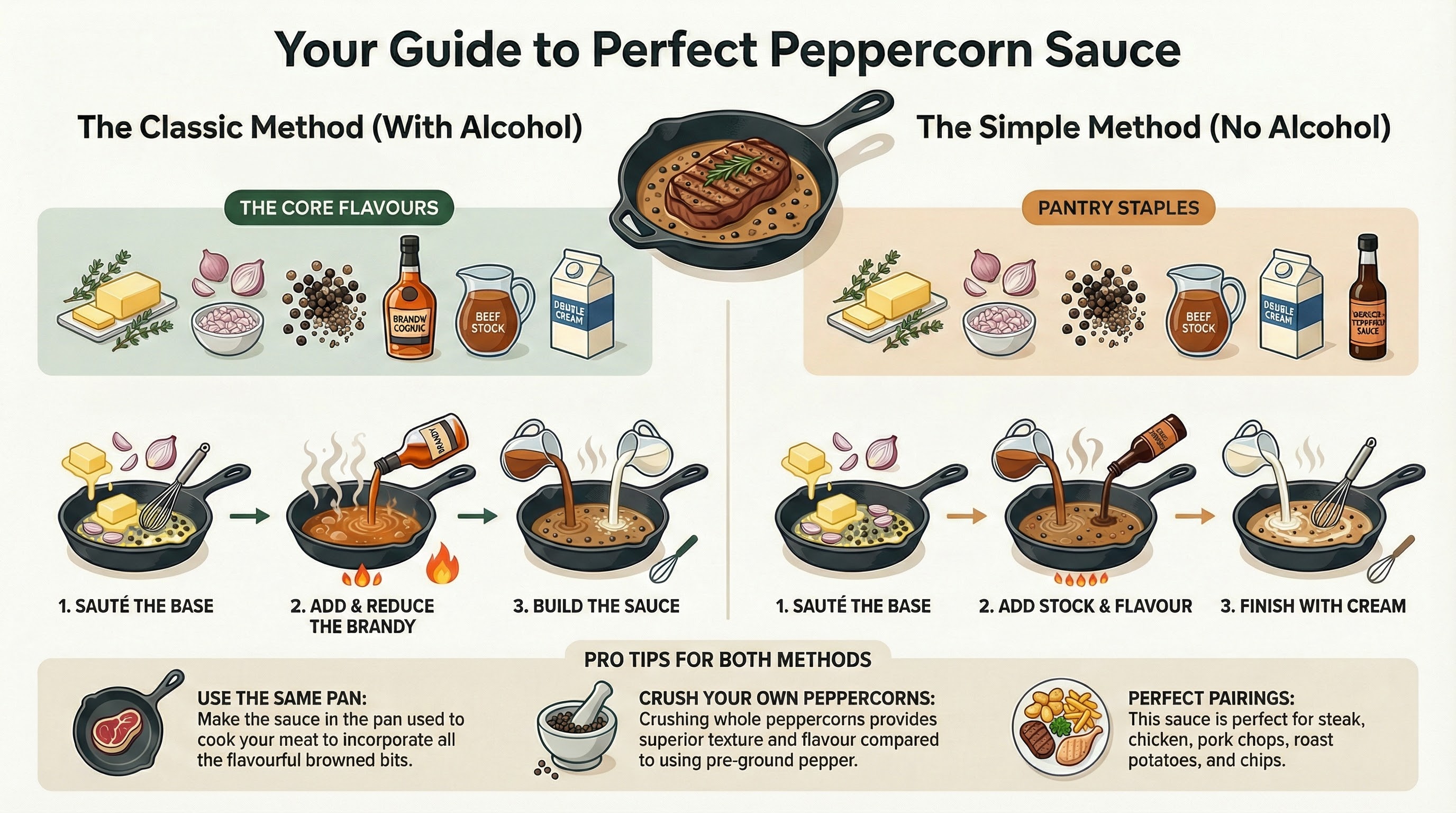
You know that sauce they drizzle over steak at nice restaurants? The one that makes you close your eyes a little when you taste it? Rich, creamy, that slow burn from the peppercorns...
Yeah. You can make that at home. In fifteen minutes. With stuff that's probably already in your kitchen.
Traditional French Steak au Poivre is a whole production - flambéing brandy, reducing for ages, the works. And that version is beautiful. But this isn't that. This is for Tuesday night when you've seared a steak and want something that tastes like a special occasion without the fuss.
And look, maybe you don't keep spirits around, maybe you're cooking for someone who avoids alcohol, maybe you just don't want to set anything on fire in your kitchen. (Valid.) This sauce works perfectly without brandy. Promise.
Ingredients & Substitutions
The cream situation: This is where I see people go wrong most often. You need double cream - that's heavy cream if you're in the States. The fat content matters. Single cream can work in a pinch, but you'll probably need to add a cornstarch slurry to get the consistency right.
Stock: Good quality beef stock. This is doing heavy lifting for colour and depth. I keep those little concentrated stock pots in my cupboard - they're not fancy but they work. Homemade is better if you have it.
Aromatics: Shallots and garlic. Not onion - shallots. They're milder, sweeter, melt into the sauce better. These are non-negotiable for building that restaurant-quality base flavour.
Alcohol (optional): Brandy or cognac is traditional. If you're using it, you don't need much - a splash, maybe two tablespoons. Marsala works beautifully as a swap. Red wine is fine too, though the colour will be different. Or skip it entirely and just use extra stock.
Black vs. Green Peppercorns: Which Should You Use?
This confused me for ages. Here's the short version:
- •Black peppercorns: Dried, sharp, spicy heat everyone associates with pepper. Assertive. Front and centre.
- •Green peppercorns: The ones in brine, usually in a little jar. Milder. Softer heat, but with this acidic, almost citrusy pop when you bite into one. More refined.
My recommendation: Use both. A mix gives you the best of everything - the warmth from the black, the briny bursts from the green. About two-thirds black to one-third green is where I usually land.
Equipment Essentials
Why Your Pan Matters (More Than You Think)
Something that might be controversial: your non-stick pan is probably not the right choice here.
Peppercorn sauce relies on what the French call "fond" - those browned bits stuck to the pan after you cook your steak. That's flavour. That's depth. Non-stick pans are specifically designed to not create fond. They also don't retain heat the same way, which makes reduction slower and less effective.
Use stainless steel or cast iron. Both get properly hot, both give you fond, both hold their temperature when you add cold liquid.
Pestle & Mortar vs. The Rolling Pin
Pre-ground pepper is forbidden. I'm being serious.
You want coarse, chunky pieces of peppercorn in this sauce - not dust. The texture matters. A pestle and mortar is ideal because you can control exactly how fine (or not fine) you go. But a rolling pin works too: put your peppercorns in a ziplock bag, seal it, whack them a few times. You're aiming for cracked, not pulverized.
Deep Dive: The Secrets Most Recipes Miss
This is the stuff I had to learn the hard way, from making this sauce probably a hundred times over the years. These are the details that separate "good" from "wait, this is actually restaurant quality."
The Velvet Finish Technique
Most peppercorn sauce recipes have you sauté your shallots, add your liquid, stir in cream, done. And that works. But you end up with visible chunks of shallot floating around. It's rustic.
But if you've ever wondered how restaurants get that glossy, completely smooth, mirror-like finish? They strain it.
Here's the chef method: cook your shallots and garlic in the cream, infusing all that flavour. Then, before you add the peppercorns back, pour the sauce through a fine mesh sieve. What you get is pure velvet. All the allium flavour, none of the texture. Then you add your peppercorns so they're the only textural element.
The Sodium Trap
This is the mistake I see constantly, and I made it myself more times than I'd like to admit.
Peppercorn sauce involves reduction - you're boiling liquid down by about half to concentrate the flavour. And here's the thing: reduction concentrates everything, including salt. If you start with already-salty stock, by the time you've reduced it, your sauce tastes like the ocean.
Use low-sodium stock. Or at minimum, do not add any additional salt until the very end, after everything is reduced and combined. Taste first. Then salt if needed.
The Umami Hack for Non-Steak Dinners
This sauce tastes noticeably better when you make it in the same pan where you just cooked a steak. All those caramelised meat juices, the fond - that's doing serious flavour work.
But what if you're serving it over chicken? Or making it vegetarian to pour over mushrooms or chips? You're missing that beef depth.
The fix is stupid simple: add a teaspoon of soy sauce. Or Marmite, if you have it (a little goes a long way). These are concentrated sources of umami that mimic what you'd get from steak drippings.
Troubleshooting Your Peppercorn Sauce
Why Is My Sauce Runny?
Nine times out of ten, it's a reduction problem. Either you didn't reduce your stock enough before adding cream, or you didn't simmer the cream long enough after. This sauce needs time to thicken.
The fix: Just keep simmering. Low heat, patient stirring. It will thicken.
The emergency fix: Mix a teaspoon of cornstarch with a tablespoon of cold water, stir it in, and simmer for another minute. It'll thicken quickly. Purists might cringe but honestly, no one will know.
Why Did My Sauce Split or Curdle?
Heat. Too much of it. Cream + high temperature = separation city.
The rescue: Take the pan completely off the heat. Add a splash of cold cream - like a tablespoon - and whisk vigorously. The temperature shock and the emulsification action can often bring it back together.
Storage, Freezing, and Reheating
- •Refrigerator: Keeps well for 3-4 days in an airtight container. The sauce will solidify when cold - that's normal, it's fat-based.
- •Reheating: Gentle heat on the stovetop. Add a splash of milk or cream and whisk while it warms to bring back the consistency. Do not microwave on high.
- •Freezing: You can freeze it, but the texture changes - it can go slightly grainy when thawed. Thaw in fridge overnight, then reheat on low heat while whisking in fresh cream.
What to Serve With Peppercorn Sauce
- •Steak: Ribeye, sirloin, filet mignon - any cut you love. This is the classic pairing for a reason.
- •Chicken: Pan-seared chicken thighs specifically. Breasts work but thighs have more fat, which plays better with rich sauces.
- •Vegetarian: Thick-cut portobello mushrooms, grilled or roasted. Or just pour it over proper chips/fries. No judgment.
Recipe Notes
- •For alcohol-free: Replace brandy with an equal amount of additional beef stock
- •For velvet finish: Strain sauce through fine mesh sieve before adding peppercorns
- •Always use low-sodium stock to control salt during reduction
- •Taste before salting - reduction concentrates everything
Restaurant-Style Creamy Peppercorn Sauce
Rich, creamy peppercorn sauce with that slow-burn heat from cracked peppercorns. Uses the Velvet Finish technique for a glossy, restaurant-quality result. Works with or without brandy.
Prep Time
5 mins
Cook Time
10 mins
Total Time
15 mins
Servings
4 servings
Ingredients
- •1 tablespoon butter
- •2 shallots, finely diced
- •2 cloves garlic, minced
- •2 tablespoons brandy or cognac (optional - substitute with extra stock)
- •200ml (3/4 cup + 1 tbsp) beef stock, low-sodium
- •200ml (3/4 cup + 1 tbsp) double cream / heavy cream
- •1 tablespoon black peppercorns, coarsely crushed
- •1 teaspoon green peppercorns in brine, drained (optional but recommended)
- •Salt to taste
- •1 teaspoon soy sauce (optional, for non-steak applications)
Instructions
- 1
Crush the Peppercorns
Crush peppercorns coarsely using a mortar and pestle or rolling pin in a ziplock bag. You want visible chunks, not powder. The texture matters - pre-ground pepper is forbidden.
- 2
Build the Aromatic Base
Melt butter in a stainless steel or cast iron skillet over medium heat (ideally the same pan you cooked your steak in). Add finely diced shallots and cook until soft, 2-3 minutes. Add garlic, cook 30 seconds until fragrant. Don't let anything brown.
- 3
Deglaze the Pan
If using brandy, add it now, stand back, and let it flame off (about 30 seconds). If skipping alcohol, add your beef stock directly and use a wooden spoon to scrape up all those beautiful browned bits (fond) from the pan bottom. That's pure flavour.
- 4
Reduce the Stock
Let the stock simmer until reduced by about half, 3-4 minutes. You'll see the liquid level drop noticeably. This is where the flavour intensifies. Don't rush it.
- 5
Add the Cream
Reduce heat to low. Stir in double cream and crushed peppercorns. Critical: keep it at a gentle simmer, not a rolling boil. Cream can split if cooked too aggressively. Let it bubble quietly for 2-3 minutes until it coats the back of a spoon.
- 6
Season and Serve
Taste first, then adjust salt if needed. Remember: reduction concentrates salt, so taste before adding any. Serve immediately over steak, chicken, or whatever you're having.
Frequently Asked Questions
Why is my peppercorn sauce runny and won't thicken?
Nine times out of ten, it's a reduction problem. Either you didn't reduce your stock enough before adding cream, or you didn't simmer the cream long enough after. Keep simmering on low heat with patient stirring - it will thicken. Emergency fix: mix a teaspoon of cornstarch with a tablespoon of cold water, stir it in, and simmer for another minute.
Why did my cream sauce split or curdle?
Too much heat. Cream plus high temperature equals separation. To rescue: take the pan completely off the heat, add a splash of cold cream (about a tablespoon), and whisk vigorously. The temperature shock and emulsification action can often bring it back together. Sometimes a splash of cold water works too.
Can I make peppercorn sauce without brandy or alcohol?
Absolutely. Just replace the brandy with an equal amount of additional beef stock. The sauce is still excellent without alcohol. The key flavours come from the fond (pan drippings), cream, and peppercorns - the brandy adds depth but isn't essential.
What's the difference between black and green peppercorns?
Black peppercorns are dried and give sharp, spicy heat that's front and centre. Green peppercorns (in brine, from a jar) are milder with softer heat and an acidic, almost citrusy pop when you bite one. Best results: use both - about two-thirds black to one-third green for warmth plus briny bursts.
Why shouldn't I use a non-stick pan for peppercorn sauce?
Non-stick pans are designed to NOT create fond - those browned bits stuck to the pan after cooking meat. That fond is pure flavour and depth for your sauce. Non-stick pans also don't retain heat the same way, making reduction slower and less effective. Use stainless steel or cast iron instead.
Can I use single cream instead of double cream?
Single cream can work in a pinch, but it has lower fat content so the sauce won't thicken as well. You'll probably need to add a cornstarch slurry to get the right consistency. It's honestly easier to just use double cream (heavy cream in the US) - the fat content matters for that silky texture.
How do I get that smooth, glossy restaurant finish?
Use the Velvet Finish technique: cook your shallots and garlic in the cream to infuse the flavour, then strain the sauce through a fine mesh sieve before adding the peppercorns back. You get all the allium flavour with none of the visible chunks - pure velvet.
Can I freeze peppercorn sauce?
You can freeze it, but the texture changes - it can go slightly grainy when thawed. If freezing: portion into containers, freeze flat, thaw completely in the fridge overnight. When reheating, use low heat and whisk in a splash of fresh cream or milk to help re-emulsify. It won't be quite as silky as fresh, but still good.
How do I make peppercorn sauce taste good without steak drippings?
Add a teaspoon of soy sauce or Marmite (a little goes a long way). These are concentrated sources of umami that mimic what you'd get from steak drippings. Perfect for serving over chicken, mushrooms, or chips when you don't have beef fond to work with.
Topics covered in this guide: